Mobility Hubs & Infrastructure
Building the infrastructure that makes autonomous mobility possible.
Regional mobility hubs
The operational base for autonomous fleets
A regional mobility hub is the operational base for autonomous fleets in an area. Hubs could bring together charging, inspection, cleaning, servicing and fleet coordination — designed from the outset to support more than one fleet and more than one technology.
Shared infrastructure reduces duplicated investment, improves utilisation and gives each new deployment a faster, lower-risk route to service.
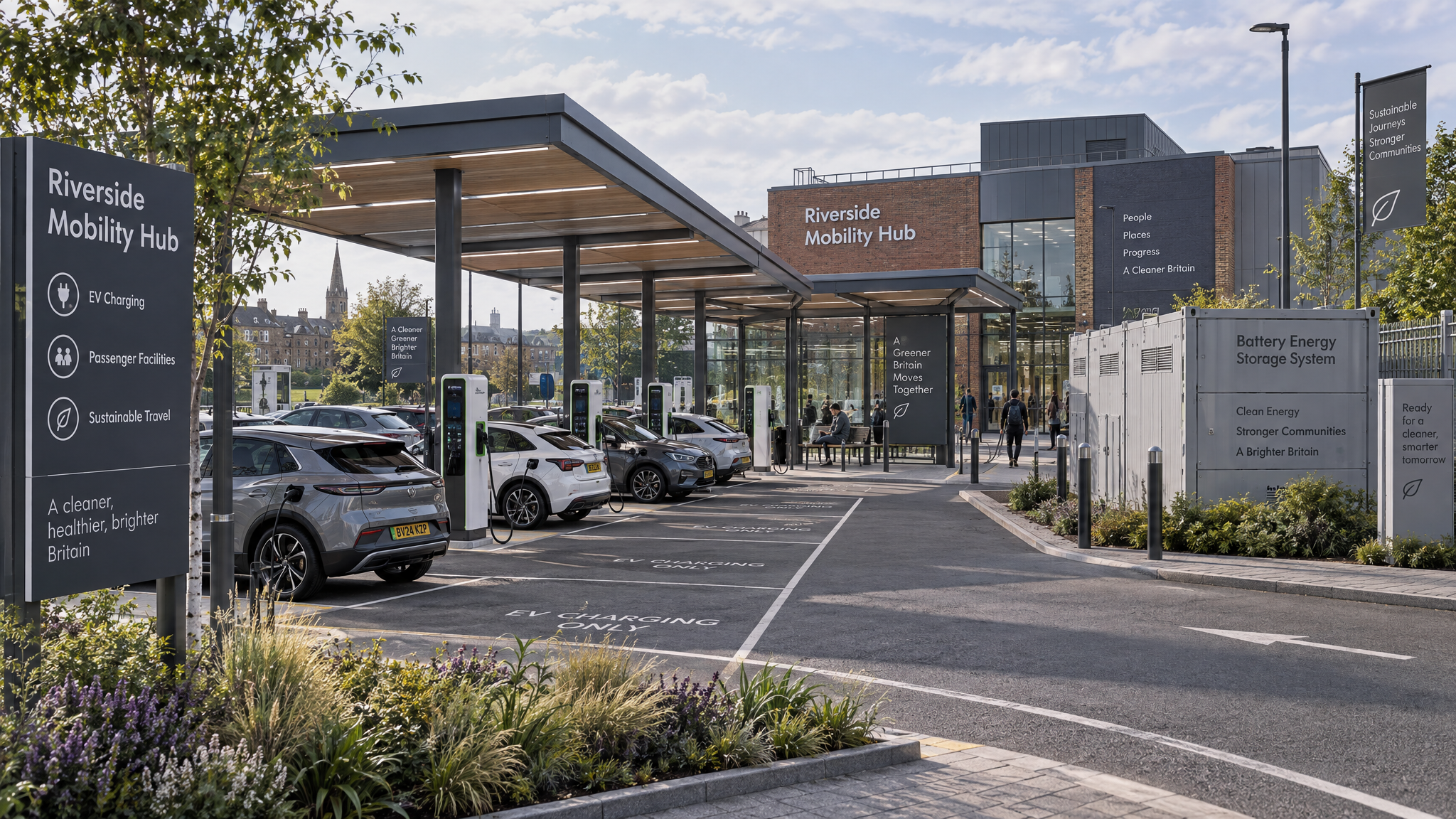
Concept visualisation. No AMUK facilities are currently built or operating.
Illustrative AMUK Mobility Hub Concept
One Infrastructure Network. Multiple Autonomous Fleets.
A single hub could serve several autonomous fleets, bringing vehicle turnaround, energy and coordination together on one site.
Illustrative AMUK Mobility Hub Concept
Concept onlyVehicle flow
- 1Vehicle arrival & inspection
- 2Cleaning & servicing
- 3Managed EV charging
- 4Vehicle readiness & dispatch
Energy
- Grid connection & energy management
- Potential solar & battery storage
Shared capacity
Space for compatible third-party fleets
Operational coordination across every fleet and service on site
Higher utilisation
Serving several fleets from one site could keep chargers, bays and staff in more consistent use.
Diversified revenue
Charging, servicing and capacity services for multiple operators could reduce reliance on any single fleet.
Efficient capital deployment
Shared infrastructure could avoid duplicated investment as new fleets and technologies enter a region.
These are commercial objectives of the multi-provider model, not guaranteed outcomes.
Vehicle turnaround
From arrival to ready for dispatch
A consistent, well-managed turnaround keeps vehicles safe, clean and available. Maintenance checks are risk-based — not every turnaround requires workshop maintenance.
- Step 1
Arrival
- Step 2
Inspection
- Step 3
Cleaning
- Step 4
Charging
- Step 5
Maintenance Check
- Step 6
Ready for Dispatch
Conceptual process. Detailed procedures will be developed with vehicle and technology partners and will reflect regulatory requirements.
Energy infrastructure
Reliable power for electric autonomous fleets
Energy is one of the most important constraints on fleet deployment. Each hub would be planned around a combination of the following, subject to site feasibility.
Grid connection
Securing appropriate grid capacity early in site planning.
Load management
Balancing demand across the site to avoid unnecessary peaks.
Charging optimisation
Scheduling charging around fleet demand, tariffs and vehicle availability.
On-site solar
Generating renewable energy where roof and land space allow.
Battery storage
Storing energy to support resilience and reduce peak grid demand.
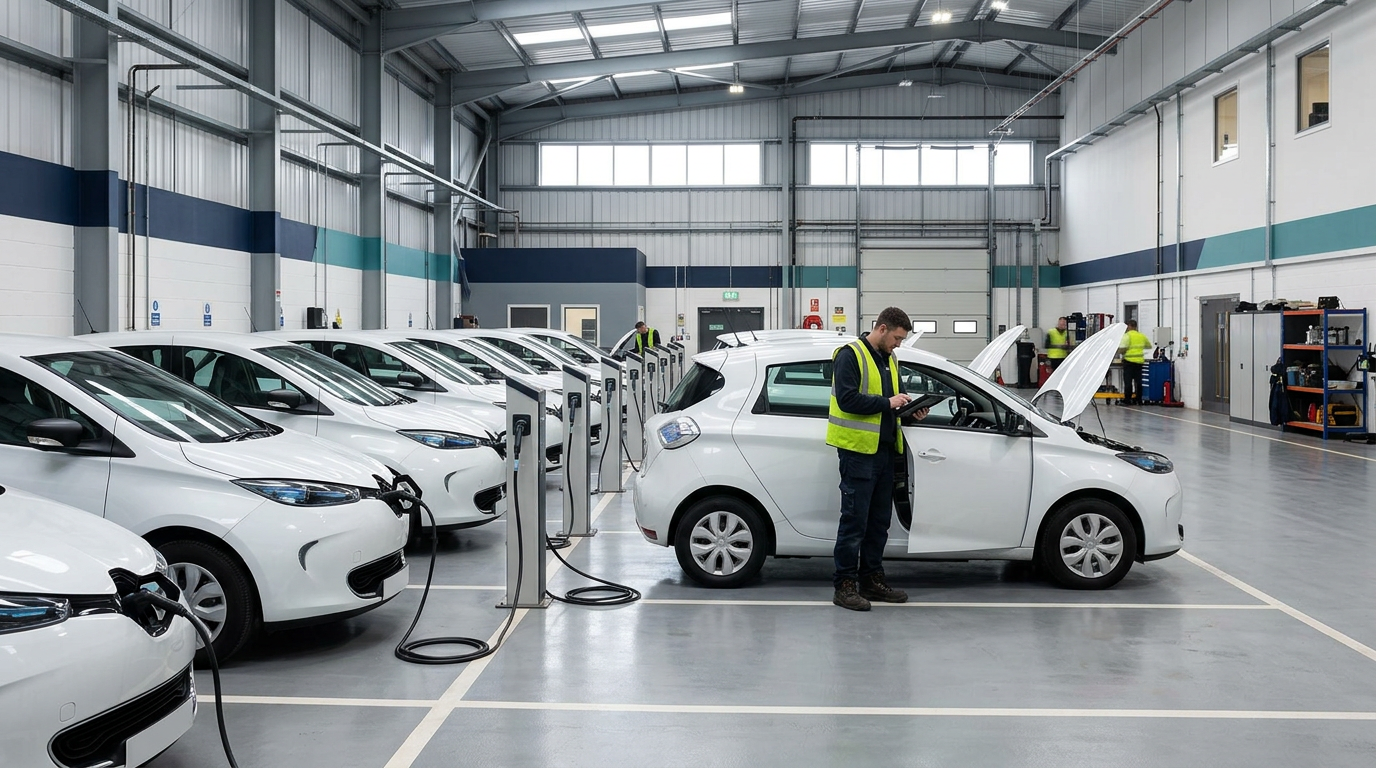
Illustrative image of a fleet servicing facility. Not an AMUK site.
Multi-operator capacity
Designed to serve more than one fleet
Hubs are intended to include separately managed capacity for other autonomous operators, so that multiple technologies and service providers can share core infrastructure while keeping their operations distinct.
Commercial infrastructure
Infrastructure with multiple potential revenue streams
- Charging and energy services
- Vehicle servicing and turnaround
- Facility and parking capacity
- Contracted fleet support for third-party operators
Potential revenue categories only. No forecasts are implied.
Scalable development
Sized to each region
Hub size and layout will vary according to passenger demand, fleet size, geography, available power and land. Sites can be developed in phases as services grow.
Partner on the infrastructure behind autonomous mobility
We welcome conversations with landowners, energy providers, charging specialists and infrastructure investors.